A Remembrance Video of Mattie

Thank you for keeping Mattie's memory alive!

Dear Mattie Blog Readers,

It means a great deal to me that you take the time to write and to share your thoughts, feelings, and reflections on Mattie's battle and death. Your messages are very meaningful and help support me through very challenging times. I am forever grateful. As my readers know, I promised to write the blog for a year after Mattie's death, which would mean that I could technically have stopped writing on September 9, 2010. However, like my journey with grief there is so much that still needs to be processed and fortunately I have a willing support network still committed to reading. Therefore, the blog continues on. If I should find the need to stop writing, I assure you I will give you advanced notice. In the mean time, thank you for reading, thank you for having the courage to share this journey with me, and most importantly thank you for keeping Mattie's memory alive.


As Mattie would say, Ooga Booga (meaning, I LOVE YOU)! Vicki


April 2, 2019

Tuesday, April 2, 2019

Tuesday, April 2, 2019 -- Mattie died 497 weeks ago today.

Tonight's picture was taken in April of 2006. This was Mattie's fourth birthday party. The first birthday party of Mattie's in which we held it outside of our home. We hosted the party at the Riverbend Nature Park, with the theme of dinosaurs. Mattie had a great time with his preschool friends, and they enjoyed a nature walk together, a pretend archaeological dig in the sandbox, a meet and greet with some reptiles, a pinata and cake. 


Quote of the day: Those we love never truly leave us. There are things that death cannot touch. ~ Jack Thorne


It was 45 degrees today, rainy and terribly windy. Nonetheless, we got in the car, drove 40 minutes into Charleston to tour the Calhoun Mansion. All I can say is WOW! I have toured many historic homes before, but this one is over the top. Mainly because the current owner still lives in the museum. Everything in the house is his, his collections! When I say he likes to collect, that would be putting it mildly. Frankly the display in each room borders on hoarding and I was so distracted by the amount in front of me that instead of focusing on the materials, I was more curious about the owner, his life, and what this collection means to him. Unfortunately the tour doesn't discuss the owner, which is a shame. The tour guide won't even use his name, so I had to do google it for more information. 


The history on the house.... George Williams, a shipping merchant, hired architect William P. Russell to design a 24,000-square-foot, 35-room manor, which cost $200,000 to build.

The house was completed in 1876, and was the first area residence with indoor plumbing. All rooms have 14-foot ceilings, ornate moldings and chandeliers with art and lighting by American artist Louis Comfort Tiffany.

After Williams died in 1903, his daughter and son-in-law, Patrick and Sara Calhoun, inherited the house. Calhoun was a grandson of John C. Calhoun, who is the country’s seventh vice president. But Calhoun mismanaged his bequest and creditors foreclosed on the house, according to Howard Stahl, the mansion’s current owner who has researched its history. Over the years the house was used as an adjunct to a hotel. But by 1972, the mansion had been condemned. Attorney Gedney Howe bought the house for $200,000 in 1976 and undertook a restoration. In 2004, Mr. Howe sold the mansion to Mr. Stahl, then a trial attorney, for $3.75 million. He decorated it with Gilded Age antiques and put a protective covenant on the property to thwart future development. The house is estimated to cost $12 million today if you were to purchase it. That is UNFURNISHED. However, with all of Stahl's collections, the house is worth billions. 

The outside of the house is stunning! The Italianate architecture captures your attention and the gardens are well manicured and inviting. You have high expectations that the interior of the house will match the outside. 
The cold did not stop us from exploring the gardens. 
I can only imagine how glorious this looks when flowers are in bloom. 
There are pathways throughout the gardens and several water features. 
It maybe hard to tell, but I was wearing four layers of clothing. I was that cold. 
One of the winged sculptures in front of the house. Who I assume is hermes. What caught my eye was that he was holding up a caduceus, sign of the medical profession.
We met our tour guide on the front porch. She did explain that this was a 24,000 square foot gilded age home. Most people back then couldn't travel to other countries. Only the rich had that luxury and to show off this wealth, they would emulate European styles within their homes. Such as the intricate wood workings one would find in Italy. This photo is actually outside the front door of the home. However, the tour guide then prepared us that this would not be an ordinary house tour. She really did not do that warning justice. 

The tour guide told us that photography was prohibited. So the photos you see here were NOT taken by me. I literally downloaded them in google images. Clearly someone took photos on a tour and here they are. I am so glad they did, because you will get a feeling for what I am talking about. However, I have to say the photos are better than actually being there. As being in the house and seeing all of these collections is overwhelming and to me it was uncomfortable. Combined with a musty odor throughout the house, made this a house tour I will never forget. 

This was the front entrance way. I can imagine it was very grand at one time when the Williams owned it. Now it is filled from floor to ceiling with things. I understand these are priceless things, not junk, but when shown altogether you as an observer become unsure as to what to focus on first, and therefore focus on nothing. 
Many of the chandeliers in the home are original and they are beautiful. Several were designed by Tiffany. 
Going up the stair case are many stuffed heads of animals. However, two of the animals on the wall were dogs and they were bronzed. When asked about this the tour guide explained that the wealthy used to bronze the head of a dead family pet to memorialize the creature. Not unlike how people used to bronze a baby shoe. 
This is the sitting room/living room. I have no idea if Mr. Stahl (the current owner) sits in this room. But it is filled with religious items, including an alter!

However, the big chandelier in the center of this photo has a cute story. It is original to the house. When Louis Tiffany visited the Williams, he brought a gift. He made them a Saki rice wine set. The Williams were devout Methodists and did not believe in alcohol consumption. So they literally asked Tiffany to take back the gift. Tiffany asked them what they would like and they suggested a chandelier. So he made the chandelier but what you can't see from this photo was that Tiffany incorporated the entire Saki rice wine set into the structure of this lighting fixture. As Tiffany did not like the notion of his gift being returned to him. 

This is the receiving room. It is the first room on the right as you enter the home. 
This was the music room. So much going on in this room. However what immediately hits you is this ostrich like structure in front of the fireplace. 


Here is a close up of what I am talking about! I am thrilled someone photographed this because I couldn't explain this without photos! It wouldn't do it justice. 
Moving onto the dining room! The owner does use this room, and just removes all of the table settings on the table. What you may not be able to see is that there are two tables in the room. There is another dining room table right near the window. 
This is a room on the second floor. Get the picture.... filled. 
After touring around the house and walking for blocks in the cold, we headed to Husk, for lunch. One of Mattie's preschool teachers told me about this restaurant. It is so popular that without a reservation you can't even get in for lunch. Fortunately I made a reservation weeks ago. 


Today, I learned about sterling silver rice beads. They are popular in Charleston. Literally it is sterling silver beads that look like kernels of rice. Rice is considered a cash crop in South Carolina history. 

The story of the rice.....
Rice arrived in the United States in 1694 when a ship sailing from the island of Madagascar, bound for England, was blown off course by a storm. It was forced to land at the colony of Charleston, South Carolina for repairs. The people there were kind to the sailors, so the captain expressed his gratitude by giving the governor of the colony a handful of rough rice grains. The grains were used by colonists for seed, and from this small amount, the people of the colony grew enough rice to supply South Carolina and other neighboring colonies. The quality of the Carolina rice was high, and the export trade with England soon developed.

April 1, 2019

Monday, April 1, 2019

Monday, April 1, 2019

Tonight's picture was taken in April of 2005, during Mattie's third birthday party. That year Mattie wanted a Blues Clues party. I created a scavenger hunt for the kids and also got a student from the university to come and perform a magic show. He also brought his bunny, which was a hit at the party. 

Quote of the day: When he died, all things soft and beautiful and bright would be buried with him. ~ Madeline Miller


Thankfully I packed for cooler weather. Today was frigid. It started out in the 40's, with the wind blowing. I literally have four layers of clothes on in order to go touring! With that said, I still don't feel like myself, as the surgery has really impacted by energy and digestive track. 

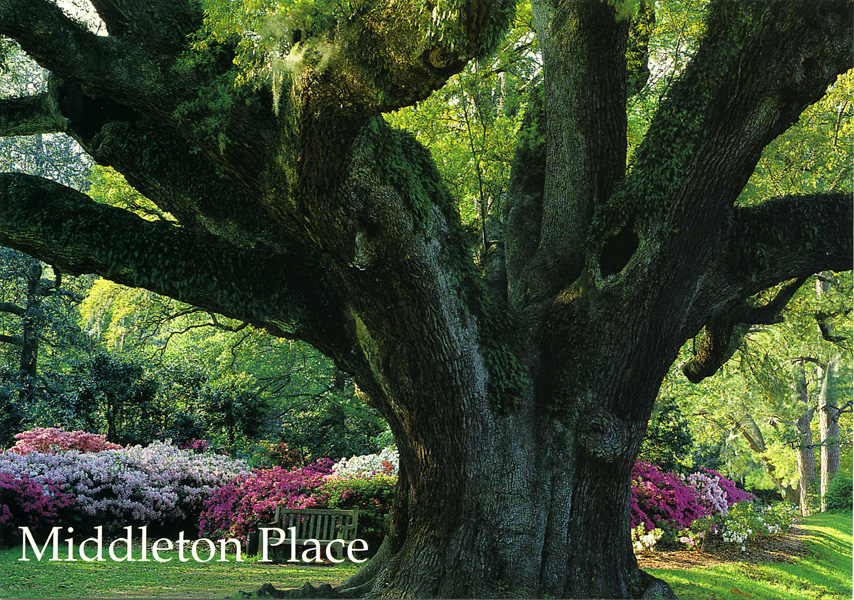
We decided to visit Middleton Place today. The Charleston area is filled with a great deal of history and plantations. When we visited this area in June of 2018, we visited the Magnolia Plantation. We both were underwhelmed by the property and felt it wasn't well maintained. We had a very different reaction to Middleton Place. Which is stunning! 

This is a representation of what the plantation used to look like... with a main house in the center, and two other smaller houses on either side, known as flankers. Currently only the South Flanker still stands and we toured it today. 

The plantation was built in several phases during the 18th and 19th centuries. The plantation was the primary residence of several generations of the Middleton family, many of whom played prominent roles in the colonial and antebellum history of South Carolina. The plantation, now a National Historic Landmark District, is used as a museum, and is home to the oldest landscaped gardens in the United States.

John Williams, an early South Carolina planter, probably began building Middleton Place in the late 1730's. His son-in-law Henry Middleton (1717–1784) inherited this property, as it was given to him in dowry for Mary Williams. Henry Middleton served as President of the First Continental Congress, and completed the house's main section and its north and south flankers, and began work on the elaborate gardens. Middleton's son, Arthur Middleton (1742–1787), a signer of Declaration of Independence, was born at Middleton Place, and lived at the plantation in the last years of his life. Arthur Middleton's son and grandson, Henry Middleton (1770–1846) and Williams Middleton (1809–1883), oversaw Middleton Place's transition from a country residence to a more active rice plantation. In 1865, toward the end of the U.S. Civil War, Union soldiers burned most of the house, leaving only the south wing and gutted walls of the north wing and main house. An earthquake in 1886 toppled the walls of the main house and north wing.

The restoration of Middleton Place began in 1916 when Middleton descendant John Julius Pringle Smith (1887–1969) and his wife began several decades of meticulously rebuilding the plantation's gardens. They had New York architect Bancel LaFarge design a stable yard complex of barn, stable, work buildings, and cottages; the buildings were constructed of brick salvaged from the ruined main house. In the early 1970's, approximately 110 acres of the 7,000-acre  plantation— including the south flanker, the gardens, and several outbuildings— were placed on the National Register of Historic Places. During the same period the Middleton descendants transferred ownership of the historic district to the non-profit Middleton Place Foundation, which presently maintains the site.

This is the famous aerial view of Middleton Place. At the end of the grass, do you see the pools on either side of the grass strip? These are supposed to represent the wings of butterflies!

Despite the cool weather, the gardens were blooming. 
I have never seen so many azaleas and camellia brushes and trees. They were truly remarkable. As azaleas always signal to me that Mattie's birthday is coming. 


Look at how beautiful these flowers are close up!
Azaleas as far as the eye can see. I just thought this was a glorious wall of flowers.

We went on a horse and carriage ride around the property. It was a 40 mile tour and our guide gave us a good overview of the family who owned this property as well as explained the nature of the rice plantation. 

The horses are a special breed... American Belgium Workhorses. Each horse weighs 2,500 pounds! They can pull more than their weight. The horses who pulled us were named Jessie and Jim. These fellows came to the property from Amish country and this is considered their retirement. They literally work three hours a day, compared to their previous life of working 8-10 hour days. 

Our guide explained how hard it was to grow rice. The plantation owners had around 200 African slaves. I had no idea, but apparently rice grew in Africa, and the slaves came to this country with the skills to cultivate rice. Around 10% of slaves died each year on this property from malaria. If malaria did not kill them, then alligators or poisonous snakes did. I can't imagine living in these conditions.

Meanwhile, all over Charleston you will see baskets made from sweet grass. This is a tradition that came from West Africa. Slaves brought this tradition to this country, as baskets like these were used on plantations to shake and dry rice. I know the last time we visited Charleston, Peter and I met a woman selling baskets. She told me she learned this skill from the women in her family. Who have been making such baskets for generations. 

The only remaining housing structure still standing on the property is the South Flanker. We took a house tour, which was about 40 minutes long. Unlike other museum houses, this house has actual family articles, furniture, and china. Not replicas! 
The plantation is worth visiting for just the gardens alone. 
Pathways after pathways filled with azaleas. 
 Picture perfect. 
This is quintessential South Carolina. Filled with live oak trees, covered with spanish moss. Ironically spanish moss is not a moss, but an air plant, which does not damage the tree it hangs from.


Can you see the four alligators? I can't get over the number of alligators around here. 
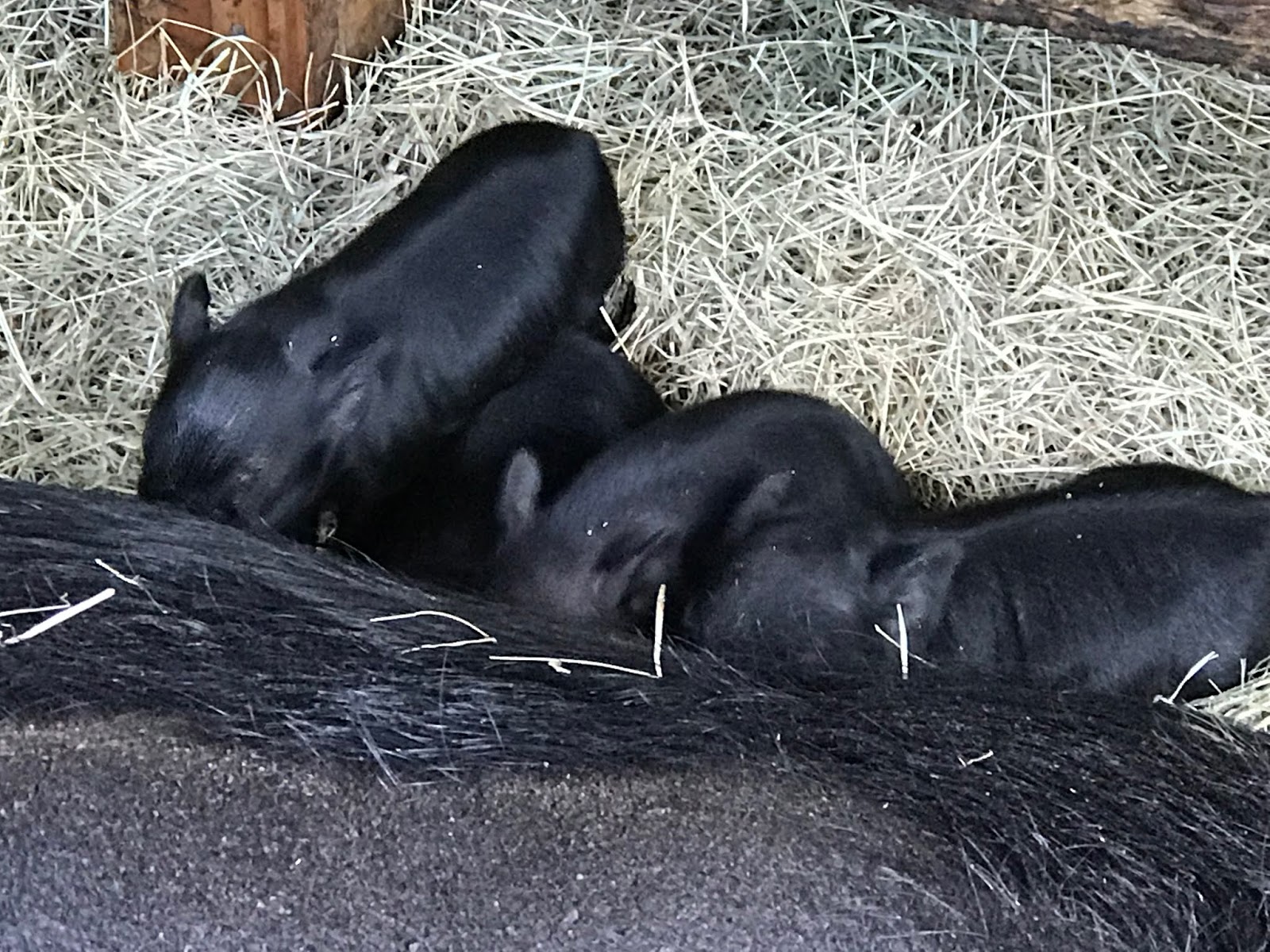
On the plantation, they have a stable yard filled with all sorts of animals. They are called heritage animals, because what we saw today, was indicative of the types of animals that inhabited the plantation in the past. 

The piglets were adorable. 
Baby lambs. 


We were touring for about four hours today in the cold. Therefore, we paused to have lunch at their restaurant. The views of the property were lovely and the food and heat were very welcomed by that point. 

March 31, 2019

Sunday, March 31, 2019

Sunday, March 31, 2019

Tonight's picture was taken in April of 2004. My mom literally snapped this photo of us before friends arrived for Mattie's second birthday party! Trains were the theme that year! Mattie's first birthday party was a challenge, but by year 2, he got it into the spirit of the festivities and actively participated. 


Quote of the day: Come back. Even as a shadow, even as a dream. ~ Euripides


Today we ventured out around the Island for a ten mile bike ride. There are apparently 30 miles of bike paths, so we only did one third of what is out there. It is cool weather here, in the 60s, but with the sun out, it was very pleasant. Perfect weather for bike riding. When we came last June, believe it or not, the humidity was already a killer. Making outdoor activities more challenging. 
I love seeing Spring in bloom. There are azaleas everywhere. My joke with Mattie was that azaleas bloom to celebrate his birthday. 
Along our bike path journey, we saw a bunch of people gathering. They were looking at this 6 foot alligator in the pond right next to the bike path. Ironically one fellow said to me that this was a "small" alligator. I don't know, as it looked pretty big to me. 
Along the bike paths, there are many places to stop and get off and walk. We walked to this observation tower. 
It was about a 40 step climb to the top of the tower. This was the view from up top!
We also biked through many beautiful neighborhoods. I snapped this photo because I like the composition of the Spanish moss and the American flag. 
Lots of beautiful sights along our journey today. This anhinga bird was sunning himself and worthy of a photo!
I did not get close enough to this tree to determine what it was. The Crepe Myrtles are not blooming yet here in South Carolina. So I know I can rule that type of tree out. 
These flowers are planted in front of the Turtle Point clubhouse. There are five public golf courses on the Island. They are beautifully landscaped and manicured. Each course seems to have its own clubhouse, with its own shops and restaurants. We biked there today to have lunch. 
My view at lunch.
An Easter type composition, which was right near the table we had lunch. What I observe about Kiawah, is there are a lot of families all around us. The kids are outside, interacting with each other, and with nature. Not glued to their phones, which is so common these days. Instead, I think the Island provides an environment which invites you to step back in time and appreciate the more simple and meaningful aspects of life.