A Remembrance Video of Mattie

Thank you for keeping Mattie's memory alive!

Dear Mattie Blog Readers,

It means a great deal to me that you take the time to write and to share your thoughts, feelings, and reflections on Mattie's battle and death. Your messages are very meaningful and help support me through very challenging times. I am forever grateful. As my readers know, I promised to write the blog for a year after Mattie's death, which would mean that I could technically have stopped writing on September 9, 2010. However, like my journey with grief there is so much that still needs to be processed and fortunately I have a willing support network still committed to reading. Therefore, the blog continues on. If I should find the need to stop writing, I assure you I will give you advanced notice. In the mean time, thank you for reading, thank you for having the courage to share this journey with me, and most importantly thank you for keeping Mattie's memory alive.


As Mattie would say, Ooga Booga (meaning, I LOVE YOU)! Vicki


February 3, 2018

Saturday, February 3, 2018

Saturday, February 3, 2018

Tonight's picture was taken in May of 2005. Mattie was three years old and as you can see he decided to stand on his tractor stool in the middle of the living room. In fact, that weekend, Mattie and Peter built this stool by hand and painted it. Mattie needed a step stool in the bathroom, and instead of buying one already made, Peter encouraged Mattie to work with him and design one together. Mattie loved the whole process and was very proud of their accomplishment. Peter and Mattie both signed their initials to the stool. The stool is priceless to me, and it remains in my clothes closet. I use it whenever I need to reach things on my top shelves. Naturally seeing this stool takes me back to this moment in time. 


Quote of the day: As people think and work together, a fabric of shared meaning comes into being. ~ Harrison Owen


Peter and I hosted a strategy session at his office in Arlington, VA today with three researchers and one clinician. The purpose of the three hour session was two fold. The first was to hear from a clinician, Greg Baiocchi, at Penn State Children's Hospital, about the ways the Psychosocial Standards (which were Mattie Miracle's vision) are being utilized to evaluate their pediatric psychosocial program. Second, we were honored to have both Dr. Julia Rowland and Dr. Lynne Padgett in the meeting, as they designed an implementation tool (like a survey) in the adult cancer world. The tool serves as both a checklist of how to objectively meet a standard as well as helps a program rate how well it is meeting the standard. Sound confusing? Let me try to simply what I am trying to describe. 

Basically the Psychosocial Standards project is like a cookbook. Picture the 15 Psychosocial Standards as the 15 top recipes in a cookbook. However, no cookbook would ever be bought if all it featured was a title of a recipe. The cookbook needs to provide more details, like a list of ingredients and instructions on how to cook the dish. Using this analogy, our meeting today, focused on the ingredients and instructions necessary to produce the dish. The dish being a psychosocial standard. Creating evidence based Standards was a great starting point (and it took three years to do), but now we have to give clinicians the necessary tools to implement these Standards. So this is how we spent three hours today! When I tell you it flew by, I am not kidding. 

In addition, Dr. Lori Wiener, who has been working closely with us since 2012, was in the meeting. I really feel after today that we have a much clearer picture of how to develop guidelines and an assessment tool so programs can rate their capacity to meet a Standard. The Standards are proving to be useful for many reasons. As we are constantly hearing from clinicians that the Standards help to provide validity to their jobs with their hospital administration. In addition, the Standards help to guide the quality of care, as it gives programs a way of assessing the kinds and frequencies of support services offered.  


In addition to it being an educational day about the Standards, I also feel I got a better understanding and glimpse into how America works today. 

Peter's company moved office space in Arlington. They are now located in a the Artisphere, which in essence is where the old Newseum (a broadcasting museum) used to be located. This whole office concept though is new to me, because several companies share the same space. This is clearly the trend businesses are moving to, to help cut down on overhead, as now multiple companies are sharing these expenses. In any case, this is one of the common work spaces I saw today! To me it looks more like a library or home. It is bright, airy, comfortable, and I am sure when people are in this space..... LOUD! This is how work is being done. No longer are people in offices or cubicles. In fact that is considered passe for corporations. To me it was a fascinating sociological study in the making. 


Check out this space! I can't imagine sitting at one of these desks with others all around me, typing, talking, and spreading out their papers and items. 


The managers of the Artisphere were very generous as they allowed us to use their conference room free of charge today. Which was very generous. For three hours we were camped out here. 

We took Starbuck's orders this morning, and each person had their drink awaiting their arrival. We also provided a catered lunch, as food is vital to keeping the brain and body working. 

What you see below (Appendix A) is a portion of the tool designed in the adult cancer world to help assess how a program is meeting a clinical standard. We spent a lot of time going through this and I am happy to report that we applied a similar model to four out of the 15 Psychosocial Standards of Care for children. I think we got the hang of it with the first four, so now we can do the work on the others. Where is the content for this tool we are creating coming from? Directly from the Standards that were published in 2015. The publication is over 200 pages, which is unwieldy. Therefore, these evidence based interventions must be arranged in a simple and user friendly document. Which was the whole purpose for meeting today, to brainstorm HOW TO DO THIS. When I initially looked at the diagram below (which is the adult model) I did not get it. But the more time we spent talking about it and interfacing with its creators today, the more sense it made. With the help of Julia and Lynne, we started to adapt the model below to our Standards. 


February 2, 2018

Friday, February 2, 2018

Friday, February 2, 2018

Tonight's picture was taken in August of 2002. Mattie was four months old and beginning to eat solid foods, such as rice cereal! Mattie LOVED it! This photo was taken prior to Mattie getting a high chair. So literally we would feed him on a lap or in his car seat! Turns out Mattie wasn't a high chair fan, so literally we fed him for as long as possible in his car seat. Until he outgrew it!


Quote of the day: Fundraising success consists of going from failure to failure without loss of enthusiasm. ~ Winston Churchill


Tonight's quote is simply brilliant! Churchill was correct, when trying to fundraise, you deal with a lot of rejection and failure. The key is how do you remain enthusiastic about what you do? I think the answer is you have to really be committed to what you are doing, believe in it, and be passionate about it. If you have this recipe in the mix, then there is a rational way through the failure. 

For example, I am working hard at finding additional corporate sponsors this year for our annual event. I have been working on connecting with people since the Fall. People who appeared to be interested in supporting us with a sponsorship. But when confronting the issue, they appear to be unwilling to commit. I could get down about that, or even wonder how someone could have doubts about supporting our mission and goals. But instead, I truly don't dwell on it and instead focus on finding the businesses who are better matches for us. I am happy to report that almost all of our corporate sponsors from last year's Walk have recommitted for this year. That to me is something to celebrate. 

As we are now into February, I turned my attention today to our Walk raffle. I wrote 17 requests to local businesses for gifts in kind, and have more to do on Sunday. Half the battle is getting started and organized. 

Meanwhile, tomorrow, Mattie Miracle is hosting a three hour strategic planning session with four psychosocial professionals to discuss ideas for developing a checklist and guidelines to help implement the psychosocial standards at treatment centers around the country. Implementation is a large undertaking, but we are committed to this because we do not want the Standards to just sit on a shelf, we want them to be usable to assist families as well as the providers. 

As for Sunny, his paw has been bandaged now for two weeks. Getting dressing changes every other day at his vet's office. Today was the last visit! Sunny has his bandage off, but we now have to apply a medical powder twice a day to his nail and he must continue to wear his protective boot outside. It is my hope that the nail begins to grow back, but for now without the bandage, I can see that Sunny is uncomfortable. 

February 1, 2018

Thursday, February 1, 2018

Thursday, February 1, 2018

Tonight's picture was taken of Mattie in May of 2002. Mattie was literally only a month old. Yet was very alert and did not want to nap! What was he looking at here? A baby bunny stuffed animal! A priceless photo! 


Quote of the day: Don’t say you don’t have enough time. You have exactly the same number of hours per day that were given to Helen Keller, Pasteur, Michaelangelo, Mother Teresa, Leonardo da Vinci, Thomas Jefferson, and Albert Einstein. ~ H. Jackson Brown Jr.


I never feel like I have enough time in any given day. Contrary to tonight's quote. I literally can't keep up with requests for help, planning the Foundation's Walk and keeping up on the admin for the Foundation. Each things are a full time job. 


A friend sent me this photo of the cover of a Lands End catalog! It caught her attention because it reminded her of Sunny.  
Do you see the resemblance to Sunny? This was Sunny last Christmas!!!


Sunny in the spring time! I can't tell you how many times people stop me to tell me Sunny looks like Lassie! I have had people yell across the street.... "there is Lassie." I even had an woman stop me on the street today to ask me if I knew who Lassie was. OF COURSE I said. Her response was..... "you have Lassie!" 

January 31, 2018

Wednesday, January 31, 2018

Wednesday, January 31, 2018

Tonight's picture was taken in September of 2002. Mattie was five months old and doing what he hated the most.... being on his tummy. Back when Mattie was a baby, the rage was tummy time. Every pediatrician talked about the benefits of tummy time on a baby's physical development. Mattie did not care so much for that recommendation and therefore rarely will you see photos of Mattie on his tummy! However, when I see this photo I always chuckle because Peter entitled it, Matt on Mat!!! 


Quote of the day: Do the smartest students, as measured by science grades and standardized test results, truly make the best physicians? ~ Ezekiel J. Emanuel


A long time friend of mine from graduate school sent me the article entitled, Does Medicine Overemphasis IQ (link to the article is below)? This article was published in the Journal of the American Medical Association (JAMA). The title alone captured my attention, so I immediately read the article. In my opinion it is a must read, but what I find particularly stunning is it wasn't written by a social worker or psychologist. NO! It was written by a medical doctor about medical doctors. 

The article begins with the quote above.... Do the smartest students, as measured by science grades and standardized test results, truly make the best physicians? I can tell you from personal experience that the answer is a resounding NO NO NO!!! But now medicine is confirming what Mattie Miracle has been saying all along..... IT'S NOT JUST ABOUT THE MEDICINE. 

Specifically, as the article points out scoring well on metrics (grades and MCAT scores) reveals nothing about other types of intelligences, especially emotional intelligence, that are critical to being an excellent physician. The example given is knowing how to calculate the speed of a ball rolling down an inclined plane is totally irrelevant to being an astute diagnostician, much less an oncologist sensitively discussing end-of-life care with a patient who has developed metastatic cancer. I couldn't have said it better. While Mattie was undergoing treatment we met some of the "best minds" in the field. However, I can't tell you how out of touch some of the physicians were, starting with the brilliant surgeon in NYC. I will never forget him. We waited hours for him to grace us with his presence. When he did, he told us he could only spend five minutes with us. Mind you the first minute he spent shaking his head and telling us how serious this was right in front of Mattie. A totally clueless wonder that shouldn't be working with anything that has a pulse. Yet he got through medical school and is considered a guru in his field. 

So what is Emotional Intelligence (EQ)? EQ is the ability to manage emotions and interact effectively with others. People with high EQs are sensitive to the moods and temperaments of others, display empathy, and appreciate multiple perspectives when approaching situations. But here is the key. Having emotional intelligence doesn't mean that you are without a brain and are just a touchy feely person. On the contrary, a high IQ may help a physician diagnose congestive heart failure and select the right medications and interventions, but it is no guarantee that the physician can lead a multidisciplinary team or effectively help patients change their behaviors in ways that tangibly improve their health outcomes. Accomplishing all of this requires a special skill set that isn't captured in data, through a scan, or even a blood test. It can only be found by LISTENING to the patient and understanding how that person feels. 

I am absolutely thrilled to hear that medical school admissions should incorporate explicit evaluations of EQ. Apparently the MCAT (the standardized test to be admitted to medical school), now includes a section on the psychological, social, and biological foundations of behavior. Amazing no? 

In so many ways, I think Mattie's cancer journey helped us understand the profound problem medicine faces today. In addition, I also believe that identifying the importance of psychosocial care in comprehensive cancer care is what has made Mattie Miracle cutting edge. 


Does Medicine Overemphasize IQ:
https://jamanetwork.com/journals/jama/fullarticle/2671354


January 30, 2018

Tuesday, January 30, 2018

Tuesday, January 30, 2018 -- 437 weeks ago today.

Tonight's picture was taken in November of 2002. Mattie was seven months old and as you can see sitting with me on the couch. We started reading to Mattie at a young age and he certainly loved the pictures and hearing me tell a story. Mattie had some favorite books, one of which was Goodnight Moon. Peter and I read this SO often, we almost had it memorized!


Quote of the day: But, instead of what our imagination makes us suppose and which we worthless try to discover, life gives us something that we could hardly imagine. ~ Marcel Proust


It seems to me that life gives us a whole lot of "somethings that we could hardly imagine." In the past few days, or I should say weeks, I have heard one nightmare cancer story after the other. I do think this clouds your mind and spirit after a while. I find ironically that I can help other families whose child has cancer. But when it comes to cancer impacting people I personally know, well this truly is different. Helping others that I don't know, is a satisfying feeling, and I find being one step removed, protects me from actually living the journey with them. However, when it's someone I know, I can visualize everything from how the person will react, and truly the day to day management of the disease. In these moments, of course I think about Mattie and what he endured. Not to mention us. Yet I remind myself that Mattie's journey has to be for a reason, and the reason is that I can personally assist others in ways that others can't! When people are running away, I tend to be walking toward!


I end tonight's posting with The Blue Moon! I literally saw this moon tonight, after leaving my friend's home. A close friend who was just diagnosed with cancer. I view this as a Mattie sign!!!

January 29, 2018

Monday, January 29, 2018

Monday, January 29, 2018

Tonight's picture was taken in October of 2002. Mattie was six months old in this photo! I would imagine that I decided to snap this photo because Mattie was rarely in his crib. He really did not like it and preferred being with me. In fact, the first several months of his life, he slept at night on my shoulder. It was a very special moment, when Mattie graduated to his crib and finally slept. But it took a lot of training to get that point because sleep did not come easy to Mattie. Now that he is gone, I always think that Mattie decided he did not want to nap or sleep because he somehow knew he had to live life to the fullest, because he wasn't going to be with us long. 


Quote of the day: There is only one kind of shock worse than the totally unexpected: the expected for which one has refused to prepare. ~ Mary Renault

This evening, we learned that one of our core researchers for Mattie Miracle died after a battle with cancer. Andrea Patenaude held various titles, such as the Associate Professor of Psychiatry at Harvard Medical School and the Director of Psycho-Oncology Research in the Division of Pediatric Oncology at the Dana-Farber Cancer Institute. We had met Andrea in March of 2012, when she agreed to serve on a panel of experts at our day long Psychosocial Symposium on Capitol Hill. Since the Symposium, we have worked closely with Andrea for the last six years. 

We learned that Andrea's cancer relapsed in 2017, but like tonight's quote pointed out....... we are shocked because so many of us refused to prepare or even accept that such a bright mind, compassionate clinician, and pioneer in the psychosocial field could die at such a young age. Peter and I are stunned, but so is the rest of our core team. 

When someone has cancer, it is important to respect their decision about telling their story and sharing their journey. Not everyone wishes to be candid with others and would instead prefer to manage things with a very small and close support system. Certainly I can respect this, but I think because I wasn't aware of how grave the situation was, it makes learning about her death today beyond shocking. We had no time to prepare for this reality and worse, there was no time to say good-bye and thank her for her amazing service to the field and for her significant role in the development of the Psychosocial Standards of Care for Children with Cancer and Their Families. All I know is the world is a little less bright today. 


This is a very short bio that Andrea wrote about herself. It can be found on Harvard Cancer Center's website (http://www.dfhcc.harvard.edu/insider/member-detail/member/andrea-f-patenaude-phd/):

For over 25 years I have been interested in the psychological adjustment of children and adults undergoing treatment for cancer. I particularly studied the impact of bone marrow transplantation on pediatric and adult patients and their families. Increasing survival of cancer patients has led to my strong interest in survivorship, resilience, and quality of life. More recently, my work has taken on the added focus of exploring the psychological impact of advances in cancer genetics. I have studied the psychosocial outcomes of women and men undergoing cancer genetic testing for p53 and BRCA1/2 and the experience of women undergoing prophylactic mastectomy for increased hereditary cancer risk.


I have many photos with Andrea over the years. This was the first day we met her, in March of 2012, at our Psychosocial Symposium on Capitol Hill. 
This was Andrea speaking to the audience at Mattie Miracle's first think tank (2013) held at the American Psychosocial Oncology Society conference in Huntington Beach, CA. 
 I am standing next to Andrea during one of the key note addresses at the American Psychosocial Oncology Society conference in Tampa, 2014.
Andrea was next to Peter at our Strategic Planning session held in Washington, DC in July of 2016. 
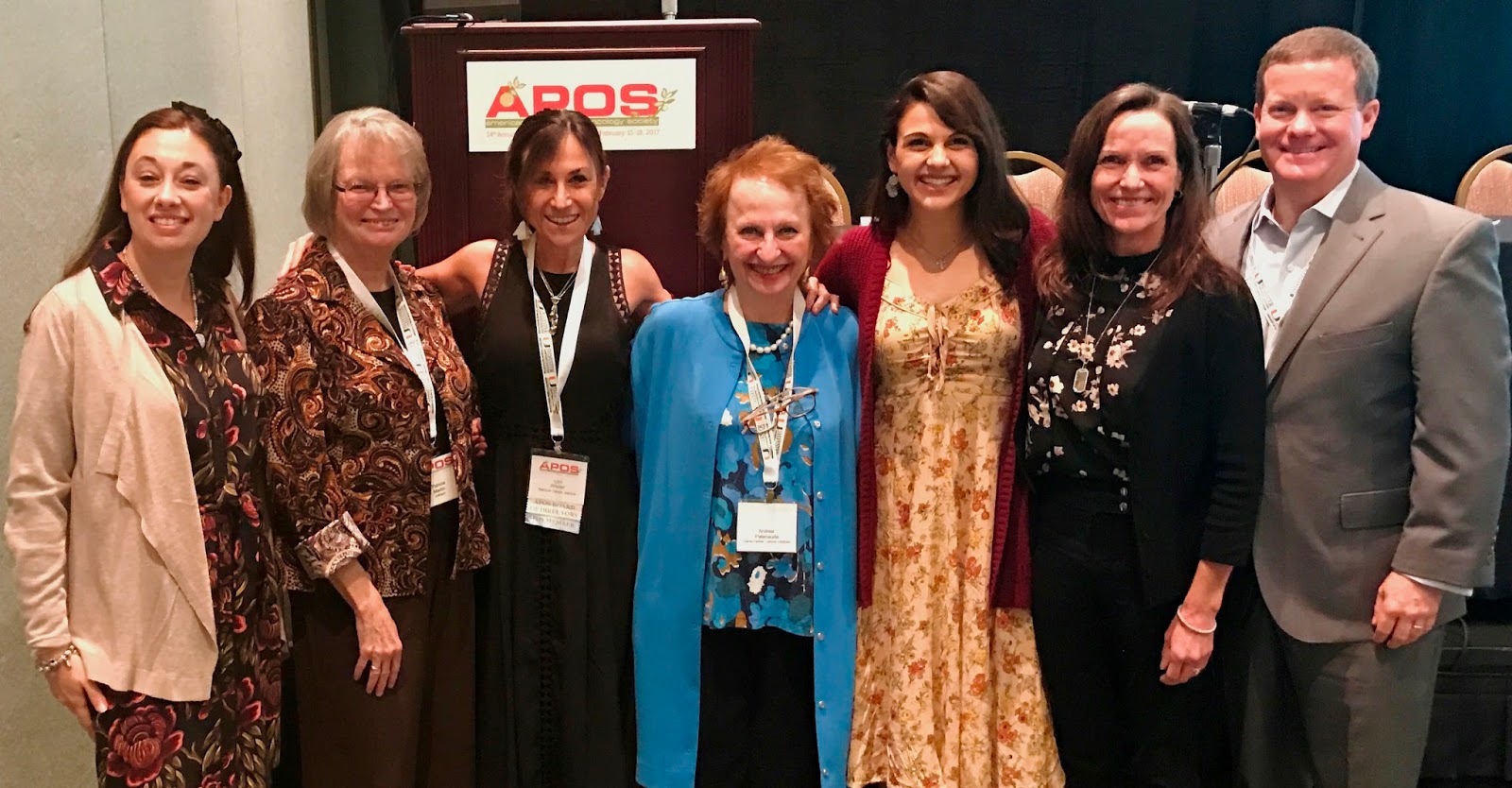
Andrea was in the center, in blue. We presented on a panel together about the Psychosocial Standards of Care at the annual American Psychosocial Oncology Society conference in Orlando, FL (2017).
This photo was taken at Mattie Miracle's Roundtable on Capitol Hill in January of 2017. Andrea was in orange, fourth person from the left in the front row. 

January 28, 2018

Sunday, January 28, 2018

Sunday, January 28, 2018

Tonight's picture was taken in November of 2002. Mattie was seven months old. Peter snapped this photo of us in front on our balcony with our oak tree in the background. This is one of my favorite photos. This oak tree didn't only provide beauty but it provided leaves that would feed caterpillars in the spring! As Mattie loved collecting caterpillars, feeding them, and watching them transform into moths. However, as Mattie and I learned, his tent moth caterpillars only ate OAK LEAVES!!!


Quote of the day: Nothing is a waste of time if you use the experience wisely. ~ Rodin


So as a recap, Sunny lost a nail on Monday, the whole nail on his left back paw. We went to the animal hospital on Monday evening and the bandaging began. Since Monday, I have had to take Sunny to the vet every two days for a solution bath of his leg and a dressing change of his bandage. This has been quite a laborious process. I have been to the vet so far..... Monday, Wednesday, Friday, and Sunday this week. The visits continue next week as well! My joke is I am happy we got pet insurance for Sunny, because so far, it has been a lifesaver in just 2017 alone. Sunny is still on antibiotics and his stomach doesn't seem happy at all. In fact, he woke me up at 7am today making a horrible sound with his mouth. Apparently the vet was concerned by my report and she did a sonogram of his abdomen. She reported that there are no tumors. Frankly my mind wasn't going there, but too bad her's did!


This afternoon, I met up with two friends and had high tea at the Mandarin Oriental Hotel in downtown, DC. I am on the quest to find the best high tea in our area, and I am STILL looking.

This was the lobby of the hotel. Which is quite beautiful and the service at the hotel is beyond helpful. 
Here is a photo of the Empress Lounge, where tea is held. It is nice in theory, but is right off the lobby. Though part of the lobby, it isn't noisy or drafty. 
A view from my seat. I am sure it is beautiful in the spring, because the lounge has a lovely patio, surrounded by a garden. I hear the garden is lined with cherry trees, which must be quite a sight in the spring. 


Today's menu! They bring out a fixed tray of sandwiches, scones, and desserts. The only thing you pick is your tea. I had a Lychee Red tea which was lovely. 


Notice the cup and saucer. I am a china affectionato, so a plain white cup and saucer did not do it for me. They serve you a side of clotted cream, lemon curd, and raspberry jam for the scones. 
The tray that comes out! Basically there are enough items for two people on this tiered tray. You can sample one of each item. 
One of my friends ordered Green Flowering Tea. Literally the tea is brought to you with a tight flower bud. As it sits in the hot water, it opens up!!! I would say that was totally different!!!

January 27, 2018

Saturday, January 27, 2018

Saturday, January 27, 2018

Tonight's picture was taken in March of 2003. Mattie was 11 months old and I can imagine you need some context to understand Peter's facial expression here. First of all, this was Mattie's first trip to visit my parents in Los Angeles. For the first couple of days of the visit, Mattie got up at 4am, thinking the day should be starting. We tried everything to get him to go back to sleep and adjust to LA time, but forget it. So for three days, we were up at 4am! Mattie was raring to go and Peter and I were like the walking wounded. Peter was trying to mimic Mattie's hand gestures in this photo and then added this crocked expression to signify that we were up before even the birds!


Quote of the day: Being deeply loved by someone gives you strength, while loving someone deeply gives you courage. ~ Lao Tzu


There are many things I remember from the time Mattie was diagnosed with cancer. But one that remains in the forefront of my mind has to do with becoming disengaged. When you first get diagnosed, people really have every good intention to support you. Until the process gets underway and the visual reality of what treatment can do to a person is just a bit too much for the average soul. Who can blame anyone? After all seeing someone so sick, especially a child, could make any of us run the other way. It isn't pleasant to observe, it makes no sense, and worse it causes us to question..... this could happen to me? So instead of dealing with all of this, it is safer to disengage and remove one's self from the scene of the cancer crime. There are many forms of disengagement though that happen when diagnosed with cancer. 

Disengagement can also happen with the patient and the family caregivers. In Mattie's case, as he received more chemo, had extensive surgeries and got sicker over time, he wanted very little to do with anyone. Other than Peter and me. He had no problem shutting people out, ignoring them, or covering his ears. I must admit as Mattie was disengaging, I too wanted to block people out. I really did not want to hear their stories of normality and I found outside visitors who came to drop things off very difficult to manage. Many of them had no common sense, and would sit in Mattie's room, trying to talk to me for hours. Meanwhile, I was simply trying to hold it together and keep Mattie calm. When I look back at it now, I don't know how I did not explode at people because hearing about things at school, another child's troubles or accomplishments was just too much. TOO MUCH!!! When you get to this point of disengagement you truly don't care about the person in front of you. It isn't intentional, it is more about self preservation and one's sanity. Therefore, though disengagement may seem harsh (or though I doubt most people knew I was disengaging from them), it is a necessary coping mechanism to survive a life or death situation. 

Since Mattie died, I have helped friends who have been gravely ill. Let's just put it this way, I am on the second hand of digit counting of friends who have died. However, when I found out this week that my friend was diagnosed with cancer, I feel like I have regressed right back to when Mattie had cancer. Meaning my lens sees two different types of people in the world. Those touched by cancer and those who live in Disneyworld (which is what I call people unaffected by cancer). It is hard not to look at the world as them versus us! I find this week that I have LITTLE tolerance for people all around me complaining about everyday problems or worse problems which I assess were brought about by bad personal decisions and choices. There are big differences between problems you brought on yourself and those that just happened to you by accident or disease. 

Of course being a mental health professional by training, having this judgmental attitude about qualifying stressors or problems is not ethically right! If I were working with clients now, I truly would need to step back. I think part of me knew this when Mattie died, which is why I never returned to teaching undergraduate and graduate students. My mind and heart were no longer there. Instead, I chose to remain living in the cancer world, by doing Mattie Miracle work. It is a world that I understand better, I get the fears, stresses, desperation and the life and death decisions that are constantly being made. 

I would say there are moments when I may appear to the average person engaged with the "normal" world, but I also know it doesn't take much to pull me out of my comfort zone. When I am out of my comfort zone, I am quite capable of giving a friend or two a lecture about the reality of what a real problem is! So when I sense that I want to take my hostility and aggression out on healthy people, I disengage! With this introspection, and I left wondering if this is also why Mattie disengaged from the world?

January 26, 2018

Friday, January 26, 2018

Friday, January 26, 2018

Tonight's picture was taken in March of 2005. Mattie was almost three years old! What were Peter and Mattie doing in this photo? Being a cockroach of course!!!! Mattie had a fascination with bugs. Particularly roaches. I think he loved my whole reaction to the mere mention of a bug, which was why he told everyone he loved bugs!!! I can't tell you how many nurses he tried to scare in the hospital with all of his plastic bugs. He was a total character. 


Quote of the day: It's always something, to know you've done the most you could. But, don't leave off hoping, or it's of no use doing anything. Hope, hope to the last! ~ Charles Dickens


This week I learned that a close friend of mine has stage IV ovarian cancer. What does stage IV mean? Well cancers are typically diagnosed in stages, which signals how aggressive the disease is and staging helps to direct treatment. If you want specifics about how cancers are staged, I included some information from ASCO's website. 

-----------------------------------------------------------------------------------------------------------
Doctors commonly use the American Joint Committee on Cancer’s (AJCC’s) TNM system to describe a cancer’s stage. Doctors use the results from tests and scans to answer these questions:


  • How large is the primary tumor? Where is it located? (Tumor, T)


  • Has the tumor spread to the lymph nodes? If so, where and how many? (Node, N)


  • Has the cancer spread to other parts of the body? If so, where and how much? (Metastasis, M)


Listed below are the general descriptions of the TNM staging system. However, each type of cancer has a separate TNM system. Learn more specific staging information for each type of cancer.

Tumor (T). The letter "T" plus a number (0 to 4) describes the size and location of the tumor, including how much the tumor has grown into nearby tissues. A larger tumor or one that has grown more deeply into the surrounding tissue receives a higher number. For some types of cancer, lowercase letters, such as “a,” “b,” or "m" (for multiple), are added to the “T” stage category to provide more detail.

Node (N). The letter "N" plus a number (0 to 3) describes whether cancer has been found in the lymph nodes. It may also describe how many of the lymph nodes contain cancer. Lymph nodes are tiny, bean-shaped organs that help fight infection. Regional lymph nodes are located closest to where the cancer began. Distant lymph nodes are located in other parts of the body. Most often, the more lymph nodes with cancer, the larger the number assigned. However, for some tumors, the location of the lymph nodes with cancer may determine the “N” stage category.

Metastasis (M). The letter "M" indicates whether the cancer has metastasized, or spread, to other parts of the body. If the cancer has not spread, it is labeled M0. If the cancer has spread, it is considered M1.

--------------------------------------------------------------------------------------------------------

Naturally I am not happy that my friend is dealing with cancer. But I knew she needed a second opinion. Fortunately I know one of the top gyn-oncologists in our area. Shortly after Mattie died, I had my own cancer scare which I dealt with for two years straight. Thanks to the help of Dr. Abbie Fields, my problem was resolved and like she suspected I did not have cancer. However, another hospital evaluated a CT scan of mine and in the report wrote possible cervical adenoma malignum. So once it goes it writing, it has to be followed up on. To this day, I would love to meet this radiologist who made this diagnosis on paper. He caused great havoc in my life for years. Even today, I still have that fear in the back of my mind. 

Abbie is the chief of gyn-oncology at Sinai Hospital in Baltimore. Going to Baltimore is not around the corner, it actually is a trek, as it is a 90 minute drive each way. But worth the visit! When I came home today, I wrote an email to the CEO and President of the Hospital (which you will find below). I have gotten the chance to meet both of these men, as Mattie Miracle is in the process of creating a child life program fund at Sinai. 


At the end of the visit today, Dr. Fields told my friend......be a roach! Sounds awful, but if you think about it, roaches are hardy insects, and can tolerate a wide range of environments from Arctic cold to tropical heat!

This brought a smile to my friend's face, because it is humorous! So now she is hash tagging... #bearoach! 

This photo captures the roach Mattie painted on a ceiling tile in the Hospital's outpatient clinic. This painting was up for a couple of weeks and then disappeared. Most likely because it scared families. I am still upset that the hospital did not give me this tile to keep. Nonetheless, Mattie would have loved Dr. Field's motto for today... be a roach! So I sent this photo to my friend to remind her of the hope that the doctor instilled in all of us today. 


NOTE TO SINAI HOSPITAL:


Dear Neil and Jonathan,

I wanted to share my positive experience today at Sinai Hospital. I realize patients, families, and donors may contact you only when there is a problem. In my case, I like to communicate both the positives and the negatives. 

As you know my October 30th meeting with X., Y., and Z. (I removed the names for this blog posting), did not go well. I left your institution very disillusioned. Given that Mattie (my son) was treated for Osteosarcoma at a major cancer center in the Washington, DC area and we lived in a hospital for over a year, I have come to understand the workings of medical institutions very well. Maybe not from an administrator's standpoint, but from the lens of the consumer. In addition, my experience running a cancer non-profit for 8 years, allows me the insight to know that administrators, physicians, and patients are not always on the same page. Which is why Peter and I pulled funding from the last institution we supported. It was a very hard decision, which is why I am overly cautious about the next institution I choose to support. 

I am glad we will have the opportunity to meet Jonathan on February 26. Because I was concerned about what I was hearing in the October meeting. I hope to learn more about the administration’s perspective on patient care and to me this means much more than just the medicine. Quality medical care is not simply the value or cost of providing care, but instead must consider how the care is delivered, the empowerment of the patient, and addressing and meeting the psychosocial needs of the patient and the family. Only when medical and psychosocial care are well integrated can the quality of life of the patient increase. As we know enhancing quality of life has been found to positively impact treatment outcomes. Physicians are crucial to helping meet the psychosocial needs of their patients and families, and I look forward to hearing how Sinai empowers the physician to provide such integrated care. I heard enough in the October meeting to pause and question whether the administration values this at Sinai. 

Which leads me to today. As you know Aziza Shad helped Mattie at the end of his life and was the physician on call the day he died. I think the true testament of a physician is watching her operate under such dire circumstances. You aren’t going to find a better or more dedicated pediatric oncologist like Aziza, who literally returns text messages instantaneously from all over the world. To this day, if I have a medical problem, and I am an adult, I immediately contact Aziza. I think that speaks volumes. 

However, what you may not know is I also have a long-term relationship with another doctor at your Hospital, Dr. Abbie Fields. Like with Aziza, I started working with Abbie when she was part of the MedStar system. Shortly after Mattie died, I had a cancer scare of my own. I literally consulted with five different gyn-oncologists, at all the major cancer institutions in our area. In my case, there were no clear-cut answers and I literally got five different opinions about what to do. Given that I just lost my son to cancer, I was in an absolute panic and quite sure I was going to die too. I received all sorts of advice from having a full hysterectomy to take the wait and see approach with constant scanning. 

Ultimately, I decided to work with Abbie. Why? Because through our interactions I came to value and trust her opinion. She was able to help me for two years straight and at the end of the day, Abbie’s clinical judgment was correct about my case.  Trust is not something I give away easily especially in the medical profession. However, with each visit and consultation I had with Abbie, I felt like she was in this for the long haul with me and wanted to arm with as much of the facts about my case as possible, so I felt empowered in my own care. Like Aziza, Abbie is also very patient centered and returns calls and emails immediately. That is beyond refreshing in the healthcare industry, and I think it speaks volumes that such fine physicians work at Sinai. They both have a way of making you feel like YOU ARE IMPORTANT, and your case is on the forefront of their minds. Patients want and seek physicians like this! Even if it means driving two hours to come to Sinai. 

I visited Abbie’s office today, not for myself, but for my friend who has been diagnosed with stage IV ovarian cancer. My friend received this diagnosis on Wednesday. When my friend asked me who she should see for a second opinion, it was a no brainer. She had to see Abbie. In fact, I told my friend she couldn’t move forward with chemo, without consulting Abbie first. I literally text messaged Abbie on Wednesday and within minutes she called me and scheduled an appointment to see my friend today. Abbie spent two hours with all of us today, took an in-depth history, answered questions, and took a sincere interest in the life of my friend. Besides Abbie’s competence and stature in her field, she also provides her patients with compassion, humor, and hope. Today’s visit was priceless, because for a moment, I saw my friend release the fear she had about her diagnosis and embrace the process ahead.  This only happened because of she sat before a skilled physician. A physician that values not only the medicine, but the human being sitting before her. 

This is a long-winded message to say thank you for bringing Aziza and Abbie into your Sinai family. As you know most of us in DC, don’t like long commutes to see our physicians. But when you have outstanding physicians like Aziza and Abbie, people will make the trek. As I have learned over the years, what makes a hospital system great is not just providing outstanding medical care, but ultimately what patients and families REMEMBER about the institution is HOW that medical care made us emotionally feel. 

Sincerely,

Vicki

January 25, 2018

Thursday, January 25, 2018

Thursday, January 25, 2018

Tonight's picture was taken in November of 2002. Mattie was 7 months old, and though he never crawled 
that did not stop him from trying to learn how to walk when only a couple of months old! 

This was one of Mattie's favorite things to do.... standing on his feet and walking with assistance! That day we received this cute zippered sweatshirt in the mail. It came from my mentor at Union College. He wanted Mattie to have something from his parent's alma mater. We snapped this photo and sent it to my immunology professor (Dr. Twitty Styles), who I still keep in contact with and he is also a Foundation supporter.  


Quote of the day: You gain strength, courage, and confidence by every experience in which you really stop to look fear in the face. You must do the thing which you think you cannot do. ~ Eleanor Roosevelt.


Peter sent me a link to an article entitled, Animal-Assisted Therapy For Childhood Cancer Reduces Stress, Improves Communication. Which is right up my alley. Sometimes I wonder what it would have been like for Mattie to have the support of a dog while in the hospital. When Mattie was in treatment, NO DOGS were allowed into the units. That has since changed. When I look at Sunny's demeanor, which is calm and gentle, I can actually picture him visiting children in the hospital. As long as there are no threats of squirrels around, Sunny is basically very compliant, follows direction, and loves attention and  engaging with people. 

I attached the link to the article below, but basically the article discusses a 7 year old clinical trial that took place at five hospital sites around the country. The researchers followed 106 pediatric patients, aged 3 to 17 years, who were newly diagnosed with cancer and undergoing chemotherapy in an outpatient clinic. Sixty children received regular visits from therapy dogs and 46 children received standard treatment (no dogs).

The article mentioned that the animal-assisted therapy program used a variety of dog breeds, ranging in shape and size. The canines were screened to ensure they were able to perform these duties. I love that it was noted that these dogs typically had a calm demeanor about them.  


Children in the treatment group received 20-minute sessions with a therapy dog about once a week for four months, in addition to their standard care. They found that pediatric patients who received animal-assisted therapy remained stable in regards to their disease-related concerns, whereas the control group showed increases in quality of life concerns. Additionally, parents in the treatment group reported that their children had significant improvements in school functioning.

I find it particularly interesting that the results showed an improvement in communication within families and between parents and medical staff. This actually doesn't surprise me. In this study they had dogs, but when Mattie was undergoing treatment we had Legos. I realize these things don't equate with each other, but the point is, I saw how positive Legos were and helped Mattie communicate and relate to his professional caregivers. When a nurse or doctor entered into Mattie's hospital room, his reaction was typically to shut down and hide under the covers. Or literally ask them to leave! But if someone started talking to him about his Lego creations, this would immediately capture his attention and change his whole feeling about the medical visit. I have to imagine that having the assistance and presence of a dog provides this similar sort of distraction and provides an ability for everyone in the room to bond over something NOT cancer! 

Bond over something NOT cancer! Which is similar to our Foundation's tagline.... It's not just about the medicine! There is something to be said about connecting with patients, not as numbers or a task, but over human concerns, commonalities and fears. I really think when health care professionals allow themselves to be human in their caregiving practices, small miracles can happen! 


Animal-Assisted Therapy For Childhood Cancer Reduces Stress, Improves Communication:

https://www.curetoday.com/articles/animalassisted-therapy-for-childhood-cancer-reduces-stress-improves-communication