A Remembrance Video of Mattie

Thank you for keeping Mattie's memory alive!

Dear Mattie Blog Readers,

It means a great deal to me that you take the time to write and to share your thoughts, feelings, and reflections on Mattie's battle and death. Your messages are very meaningful and help support me through very challenging times. I am forever grateful. As my readers know, I promised to write the blog for a year after Mattie's death, which would mean that I could technically have stopped writing on September 9, 2010. However, like my journey with grief there is so much that still needs to be processed and fortunately I have a willing support network still committed to reading. Therefore, the blog continues on. If I should find the need to stop writing, I assure you I will give you advanced notice. In the mean time, thank you for reading, thank you for having the courage to share this journey with me, and most importantly thank you for keeping Mattie's memory alive.


As Mattie would say, Ooga Booga (meaning, I LOVE YOU)! Vicki


August 26, 2015

Tuesday, August 25, 2015

Tuesday, August 25, 2015 -- Mattie died 311 weeks ago today.

Tonight's picture was taken in August of 2007. Mattie was working away on one of his favorite things... digging through sand, clay, and pebbles to reveal a plastic dinosaur. Mattie loved the whole notion of being an archaeologist! He started his love for digging when he was well but this activity even continued during his battle with cancer in the hospital. His hospital room would be transformed with a sheet on the floor, Mattie on top of the sheet digging, with goggles on and all his tools beside him. 


Quote of the day: A person who never made a mistake never tried anything new. ~ Albert Einstein

Today we visited The Autry Museum. This museum is dedicated to exploring and sharing the stories, experiences, and perceptions of the diverse people of the American West, connecting the past to the present to inspire our shared future. This is an incredibly rich and historical place to visit and each time I visit the Autry I am thoroughly impressed with their special exhibits and the level of detail that goes into assembling each gallery as well as the signage created to explain each and every item on view. The last time I was in Los Angeles and attended the Autry, I attended an exhibit that enlightened me on the Dust Bowl. Today's exhibit was on the Civil war and the role the West played during that time period. I have to admit that when I think of the Civil War, I isolate the battles and issues to the North and the South. But today I learned that so much more was going on. As the West was expanding the same issues with human rights and freedoms that the North and South were fighting about carried over into the West.  Every state and individual to some extent was involved in this conflict, including Native Americans, who interestingly enough fought on the side of the Confederacy. 

Below is a description of Today's exhibit in more detail!

The West is seldom considered in the context of the Civil War, yet Westward expansion shaped the issues that ignited that tumultuous conflict. Westerners fought in the war for both the Union and the Confederacy, felt its impact at home, and struggled with its civil rights legacy in the Reconstruction era. Empire and Liberty: The Civil War and the West investigates how Westward expansion repeatedly tested the meaning of freedom and the rights of individuals.

Empire and Liberty is presented in four sections. The first section was entitled, The Fire Bell in the Night (1803-1820). Taking its title from Thomas Jefferson’s pronouncement on the Missouri Compromise, the exhibition opens with the Louisiana Purchase and early Westward expansion, using artifacts and narratives to demonstrate that slavery reached beyond the chattel slavery of the American South to include debt slavery repaid with labor, and captive slavery, a frequent practice in Native American cultures. The Louisiana Purchase in 1803 incited fierce arguments and led to the Missouri Compromise of 1820 that divided the Western Territories into slave and non-slave sectors. In this section, an 1801 peace medal and a contemporary beaded peace medal box by Dyanni Hamilton-Youngbird (Navajo) further convey Westward expansion's complexities.

The second section of the exhibit was entitled, The Western Powder Keg (1820-1860). The West became even more explosive as the nineteenth century progressed. This section described aggressive campaigns to expel Native people from the South to the West, a move motivated by Southern cotton growers, whose profit-making ambitions snowballed with the invention of the cotton gin. The entry of Texas into the Union as a slave state proved a heated flashpoint, and the U.S.-Mexican War vastly increased the American empire and served as a training ground for future Civil War leaders Robert E. Lee, Ulysses S. Grant, and Jefferson Davis. The California Gold Rush exposed many versions of forced labor. Gold Rush greed was also devastating to Native populations, who were enslaved and murdered in genocidal numbers. A Californian, John Charles Fremont, (pictured is John Fremont's expedition flag, circa 1841) was the nation’s first “Free Soil, Free Men” presidential candidate in 1856, the same year the pro and anti-slavery forces fought in “bloody” Kansas.

The third section of the exhibit was entitled, Blue and Grey (1861-1865). Empire and Liberty depicts Westerners’ participation in the Civil War alongside its impact on life in the West. The war splintered communities as Westerners flocked to both armies. When Texan Confederates invaded the New Mexico territory, they were repelled by a small cadre of Army regulars reinforced by volunteers from California and Colorado. Numerous wars flared in Indian country, with the Dakota in Minnesota; Apache and DinĂ© (Navajo) in Arizona and New Mexico; and Cheyenne, Arapaho, Kiowa, and Comanche in Kansas, Colorado, and Texas. Lincoln’s Emancipation Proclamation of 1863 and the Thirteenth Amendment triggered questions about unfree labor in the West, including Native slaves, indentured servitude in California, and debt slavery in New Mexico.

The final section of the exhibit was entitled, The West and Reconstruction (1865-present). Through a combination of artifacts and narratives, this section explored how post-war Westward expansion continued to spawn battles over who could enjoy the rights of American citizenship. While the Transcontinental Railroad symbolized the reunited nation, it put new pressures on Native homelands and brought thousands of Chinese, Irish, African Americans, and war veterans to the West. The Civil War escalated other wars against Native people that continued into the Reconstruction period. 

August 24, 2015

Monday, August 24, 2015

Monday, August 24, 2015

Tonight's picture was taken in August of 2007. This is a follow up photo to the one I posted last night. We took Mattie to the La Brea Tar Pits and after exploring the Museum and Tar Pits, Mattie loved to walk around and climb on the prehistoric creatures they had outside. These creatures were designed for just these purposes, for kids to climb and interact with them, as well as appreciate their impressive size.


Quote of the day:  I have been impressed with the urgency of doing. Knowing is not enough; we must apply. Being willing is not enough; we must do. ~ Leonardo da Vinci

This spring, Peter and I were invited to serve on the Family Advisory Board for The Center for Pediatric Traumatic Stress: http://www.chop.edu/centers-programs/center-pediatric-traumatic-stress. The Center for Pediatric Traumatic Stress (CPTS) at The Children's Hospital of Philadelphia addresses medical trauma in the lives of children and families. Founded in 2002 as a multidisciplinary intervention development center within the National Child Traumatic Stress Network, CPTS has recently received additional funding by the Substance Abuse Mental Health Services Administration (SAMHSA) to further its work in preventing and treating medical traumatic stress in healthcare settings.

Peter and I are NO STRANGERS to Medical Traumatic Stress. This was something Mattie dealt with as a result of his treatment. In fact, Peter and I still contend with aspects of these issues, especially when walking through the hallways of Georgetown University Hospital or during scans and procedures for ourselves. 

Pediatric medical traumatic stress is a set of psychological and physiological responses children and their families have to:

  • Pain
  • Injury
  • Serious illness
  • Medical procedures
  • Invasive or frightening treatment experiences in medical settings


These responses may include symptoms of arousal, re-experiencing and avoidance. Symptoms can vary in intensity and are often related to the child's or family member's subjective experience.

Recently, the Center contacted Peter and asked him whether he would submit an article for their blog. Peter has a reputation in our psychosocial circle for being the social media guru. So it was no surprise to me that these professionals reached out to Peter. He can effectively write and he is technologically savvy, so I am happy Peter had the opportunity to promote and chat on the blog about the National Psychosocial Standards of Care that will be published this Fall in the journal of Pediatric Blood and Cancer! Mattie Miracle had the vision to establish such Standards back in 2012. Standards which we felt needed to be created to ensure that all children with cancer and their families would have access to a minimum level of psychological, social, and emotional care from the time of diagnosis, through survivorship or end of life and bereavement care. 

To see the blog posting hosted by Children's Hospital of Philadelphia, go to:

https://www.healthcaretoolbox.org/latest-news/22-e-emotional-support/383-psychosocial-care-for-children-with-cancer-and-their-families.html

Sunday, August 23, 2015

Sunday, August 23, 2015

Tonight's picture was taken in August of 2007. We took Mattie to one of his favorite museums in Los Angeles, the George C. Page Museum at the La Brea Tar Pits. The Tar Pits is one of the world's most famous ice age fossil excavation sites, and the museum then houses the fossils which are unearthed. There is even an active pit in which archaeologists are still actively digging up fossils. As you can see, Mattie was standing in front of a tar pit and as we all know very well.... tar has an awful smell! Which was why Mattie was trying to cover his nose and mouth and was making a funny face! The stench from behind him was remarkable! You can also see the models of prehistoric creatures they placed in the tar pits, to give visitors an understanding for how these creatures may have wandered into the pits looking for water, but then got stuck in the tar unable to move. Which is how these prehistoric creatures died and were preserved throughout time in the pits. 


Quote of the day: We must believe that we are gifted for something, and that this thing, at whatever cost, must be attained. ~ Marie Curie


Today we went to see a play/musical/comedy at a local theatre called The Fabulous Lipitones. The name of the play catches you immediately because you really want to know what is a lipitone? Is it a growth, a disease, a name or what??? Then you look at the playbill and see the four cast of characters on the front and you quickly surmise this is a very interesting quartet. 

In its California premiere The Fabulous Lipitones by John Markus (who is well known for his comedy script writing of the Cosby Show and A Different World) and Mark St. Germain sounds like a silly promo for an overrated medical ("lipitor") product and with its initially corny lines could easily fall into the category of 'sitcom onstage' comedy. Lipitones is a funny and substantially reflective take on what might happen if a traditional barbershop quartet inducted a culturally "un...suitable replacement."


As the play opens up you understand that longtime tenor Andy (a member of the original quartet) has passed away and the group is considering the possibility of closing up shop. After all, they say...who sings barbershop anymore? It's a dying art. They were a barbershop quartet - four men with perfect harmony. But the songs they sang are by and large very old: "Wait 'Til the Sun Shines, Nellie." "After You've Gone" or "Grand Old Flag." Anyway, remaining members Howard (John Racca), Wally (Steve Gunderson) and Phil (Dennis Holland) admire Bob or Baba Mati Singh's (Asante Gunewardena) vocal ability, it's just that he's from Afghanistan, or India (they aren't sure!)? To avoid the label "illegal," his auto-shop boss has been resigning him up for employment every 6 months under a different alias and country. If anyone squeals, he'll be deported, and Phil might just have dropped the bomb, as he's the most opposed to Bob joining the group. Each of the three guys has an issue of his own to contend with. Phil owns a fitness gym and is about to be ousted by younger co-management, who find more mature men sexually unappealing; Wally is a pharmacist more into getting a date with his female "pharmacettes" than into filling prescriptions; only Howard is the most devoted, as he is taking care of a sick wife who once left him for another man. Hardly saints, these men must learn to compromise and adapt their feelings to Indian Bob.

Bob, by the way, does not at all understand their choice of songs. "I'm Only a Bird in a Gilded Cage" or "I Want a Girl, Just Like the Girl That Married Dear Old Dad" give him a horrible image of Americans as he interprets the lyrics literally. His culture will not allow him to accept anyone or anything caged and certainly not a woman who marries her father. Funny, funny misunderstandings concocted by Markus and St. Germain! Bob admires Howard for his devotion to his wife, and when she dies, everyone rallies ... even Bob, who still has not been arrested by the feds. One terribly amusing sight gag is Bob's turban that he somehow manages to reduce in size to fit under the boys' costumed straw hats. In the midst of this hilarious comedy, is great meaning! The show enables four men to find themselves and to develop tolerance, appreciation, and cultural sensitivity for one another. Which through this special bond is what ultimately produced their great harmony and music together!

Here is a clip of the last song they performed together ("The Little Bunny") and after the song, the actor who portrayed "Bob" did a short interview:

https://www.youtube.com/watch?v=tt-qepQk_T4

August 22, 2015

Saturday, August 22, 2015

Saturday, August 22, 2015

Tonight's picture was taken in August of 2007. Mattie was five years old, and in a way it is hard to believe that the following summer Mattie was diagnosed with cancer. When this photo was taken, we had no idea what was ahead of us. We took Mattie to the LA Zoo and I remember that we bought this purple fan and spray bottle that he was holding. He wanted it because it was an incredibly hot day. The irony is we still have this purple fan and bottle, and Peter uses it on hot days. It always reminds of that moment in time with Mattie.
Quote of the day: Teach thy tongue to say, “I do not know,” and thous shalt progress. ~ Maimonides


Today we went to visit the LA County Arboretum. This is a very special place to spend the day and I remember taking Mattie here many times! He loved it for so MANY reasons. 

The arboretum's plants are grouped by geography with gardens for South American, Mediterranean, South African, Australian and Asiatic-North American plants. Other displays include the Aquatic Garden, Meadowbrook, Demonstration Home Gardens, Garden for All Seasons, Prehistoric and Jungle Garden, Native Oaks, Herb Garden, and the Palm and Bamboo collection. The gardens also serve as the home for summer concerts featuring the Pasadena POPS.

The Arboretum is sited on a remaining portion of the Rancho Santa Anita, one of the Mexican land grants of Southern California. Rancho Santa Anita was unusual in that it was located above a large part of the Raymond Basin aquifer. Three sag ponds and numerous springs were found in the area and the only remaining one is now called Baldwin Lake. Lacy Park in the city of San Marino once was another sag pond and the precise location of the third is not known but may have been on the grounds of the Huntington Library and Botanic Garden. As a consequence of the relative abundance of water, it was important area in prehistory as a year round source of water, the body of water known as Baldwin Lake and the other sag ponds attracted both waterfowl and other animals as well as Native Americans. Not surprisingly the presence of water and game created a permanent Native American habitation in the area and is believed to have been the location of the Tongva village of Aleupkigna. The exact location of the village is unknown. The close proximity to the nearby San Gabriel Mission may have led to the construction of a small seasonal dwelling at the Arboretum site for shepherds or hunters which ultimately led to the construction of a modest adobe structure.

The site's modern history began in 1875 when Elias Jackson "Lucky" Baldwin purchased Rancho Santa Anita and constructed its buildings and grounds. Baldwin's influence was a strong presence on the site. A certain flamboyance was evident in the creation of a showcase at Santa Anita. Baldwin in some ways anticipated the development of Las Vegas creating Arcadia as a kind of prototype destination resort. The arboretum itself began in 1947 with California and Los Angeles jointly purchasing 111 acres to create an arboretum around the Baldwin site.

In addition, the arboretum is home to a flock of some 200 peafowl, which are descendants of original birds imported by Elias Jackson Baldwin from India. The peafowl is a symbol of the city of Arcadia.


The Arboretum was featuring a new exhibit... an outdoor gallery which displayed the work of more than 80 artists from Arcadia, Pasadena, Altadena, the San Gabriel Valley and northern and southern California. The artists selected the exact spot in the garden they wanted to showcase their work.  


The Herb Garden showcases herbs and shrubs that contribute to human cultures around the world. The garden reveals the botanical sources for medicines, spices, textiles and other basics of living. What intrigued us and captured our noses while walking through that garden was this wonderful vine like structure of jasmine. It was SO large it looked like a tree covering a bench. 

This portion of the garden maybe the most famous. It is used as a set for many motion pictures. The rose garden was designed by noted landscape architect Edward Huntsmen Trout. The Rose Garden features heritage varieties with elegant pergolas and arbors, all in a setting of citrus and swaying Mexican fan palms.

On the property still stands Elias Jackson (“Lucky”) Baldwin’s Queen Anne Cottage, which was constructed in 1885-86, probably as a honeymoon gift for his fourth wife, sixteen-year-old Lillie Bennett. “For a year after she married Baldwin (May, 1884), this little girl was queen of the ranch,” wrote the Los Angeles Times. Lillie’s father, architect Albert A. Bennett, designed the cottage, but the honeymooners apparently never enjoyed its beauty. Lillie and E.J. separated in 1885, and the fanciful house was converted by its owner into a memorial to the third Mrs. Baldwin, Jennie Dexter, who had died in 1881. A stained glass portrait of Jennie stood welcome in the front door and an almost life-size oil painting of her was hung in the Cottage parlor. Both items remain today.

When I tell you it was HOT out, that would be an understatement. It was even too hot for me to walk! My mom and I walked a bit, but then we had to stop because it was oppressive. Only Mr. Lizard was out sunning himself. But most people were undercover! The lizard would have been a sight Mattie would have appreciated!


As we were leaving the garden, I spotted this... a wonderful butterfly. Butterflies are very symbolic to me of Mattie. When I see them fluttering around me, they remind me that Mattie is always with me. 

Friday, August 21, 2015

Friday, August 21, 2015

Tonight's picture was taken in August of 2006. We took Mattie to Griffith Park in Los Angeles. This park is a gem for children of all ages. It is filled with playgrounds, pony rides, an amazing old world carousel, and all sorts of train rides. Mattie loved going on the trains! This was something I never experienced when I lived in Los Angeles as a teenager. In fact, I never visited Griffith Park in general. But when Mattie came into our lives, he introduced us to all sorts of adventures. 


Quote of the day: Certain things catch your eye, but pursue only those that capture the heart. ~ Ancient Indian Proverb


On social media the other day, Mattie Miracle was advertised as being a sponsor for Curefest held on September 19 and 20 in Washington, DC. Curefest is the largest advocacy and awareness event that the childhood cancer community organizes each year. Organizations and individuals unite together on the National Mall to walk three miles and call attention to childhood cancer. This event draws thousands of people from all over the Country and enhances the public's awareness of this disease. Here was the ad that went out on social media about Mattie Miracle:


We are just one month away from the CureFest walk and festival! Dozens of amazing organizations, including MattieMiracle CancerFoundation will come together on the National Mall!

"The Mattie Miracle Cancer Foundation is a 501(c)(3) Public Charity founded by Peter Brown and Victoria Sardi-Brown, in loving memory of their seven-year-old son Mattie, who died in 2009 from Osteosarcoma, a form of bone... cancer. Mattie Miracle is dedicated to increasing childhood cancer awareness, education, advocacy, research and psychosocial support services to children, their families, and medical personnel. Mattie Miracle had the vision and is funding a National psychosocial standard of care project for childhood cancer, so that children and families around the Country will be ensured a minimum level of psychosocial care from the time of diagnosis throughout treatment, and into survivorship or end of life and bereavement care.

"Mattie Miracle attended Curefest in 2014, and found it to be a true psychosocial experience! Children, parents, and caregivers who are passionate about childhood cancer have the opportunity to gather on the Mall to unite, share stories and information with one another, and collectively advocate to make our voices heard. Given our Foundation's psychosocial mission, we are proud to be able to sponsor an event which enables the childhood cancer community to network and advocate with one voice."


This morning through Facebook my cousin Maria sent me this photo. I met Maria when we were both children. Maria grew up in Switzerland and Italy and her native language is Italian. When we met each other as children, Maria did not speak English and I did not speak Italian. Yet the beauty of children, is we found a way to understand each other. After Mattie died, Maria and I got reconnected again and with the power of Facebook, Maria has now connected me with my cousins in Italy. Rather remarkable what technology can do. This photo was taken around my seventh birthday. I was celebrating it with my paternal grandparents, my dad, and cousin Battista, who was visiting from Italy. It is a rather sobering reality to know that I was the same age in this photo that Mattie died at, age 7.

Maria also sent me this photo! It is a picture of my great grandparents home in Cassano. When I was a child I visited Cassano several times. This was the town my paternal grandmother was born and raised in and it is remarkable now to be able to see these photos that Maria is sending me through an adult eye and lens. As I told Maria she is sharing photogenic gifts with me. 


This morning my mom and I went on a walk in my parent's neighborhood. I have to take some photos of the terrain now, which is greatly browned due to the severe drought! California doesn't look so GREEN. It is almost hard to recognize, and I would like to share this perspective with you. But on our walk we passed this wonderful pomegranate trees. It was very tempting to want to pluck several fruit right off the vine!


Near the pomegranate tree was a bank of oleanders. I honestly do not know how any thing is growing with such a lack of water. There are watering restrictions enforced here and if you are caught violating them you could be fined $500. You are allowed to use sprinklers only on tuesday and saturday for 15 minutes only. You can also hand water after 6pm every day if you wish. But I have noticed FEW people do this. I am not sure if it is time factor, laziness factor, or what. However, what is abundantly evident is the lack of water is effecting everything.... grass, flowers, trees, bushes, you name it. 

August 21, 2015

Thursday, August 20, 2015

Thursday, August 20, 2015

Tonight's picture was taken in August of 2003. Mattie was 16 months old and was visiting my parents in Los Angeles. Mattie was intrigued by the piano. He loved sitting on a lap and playing away on the keyboard. The sound fascinated him and it was like watching science in motion with him as he tested the white and black keys, the sound of the keys which made high pitched sounds versus low pitched ones, and of course the overall noise level based on how much pressure and force he put into the keys. 


Quote of the day:  People often say that motivation doesn’t last. Well, neither does bathing.  That’s why we recommend it daily. ~ Zig Ziglar


Today we visited The Norton Simon Museum in Pasadena. The Norton Simon Museum is known around the world as one of the most remarkable private art collections ever assembled. Over a thirty-year period 20th-century industrialist Norton Simon (1907–1993) amassed an astonishing collection of European art from the Renaissance to the 20th century and a stellar collection of South and Southeast Asian art spanning 2,000 years. Among the most celebrated works he collected are Branchini Madonna, 1427, by Giovanni di Paolo; Madonna and Child with Book, c. 1502-03, by Raphael; Still Life with Lemons, Oranges and a Rose, 1633, by Francisco de ZurbarĂ¡n; Portrait of a Boy, c. 1655-60, by Rembrandt van Rijn; Mulberry Tree, 1889, by Vincent van Gogh; Little Dancer Aged Fourteen, 1878-81, by Edgar Degas; and Woman with a Book, 1932, by Pablo Picasso. 

Sculpture Garden
In the 1990s, the Norton Simon Museum underwent an extensive remodel; its interiors were redesigned by celebrated architect Frank O. Gehry, and its exteriors by landscape designer Nancy Goslee Power. Jennifer Jones Simon, widow of Norton Simon and then Chairman of the Museum’s Board of Trustees, asked Power to create a garden “just like Monet’s Giverny.”
While the garden is not an exact replica of Monet’s, the lush texture and rambling spirit of Giverny is evident. With a special request from Mrs. Simon, attention was given to ensure that the flowering of plants and trees continued during all seasons of the year. Finally, in the fall of 1999, the re-imagined garden opened, and it has grown more spectacular ever since.

This Monet themed garden is lined with bronze sculptures at every turn. They are amazingly well integrated into the gardens. Here is Henry Moore's Sculpture entitled, "Relief No. 1."


Within the gardens is this HUGE Cockspur Coral Tree. This is one noteworthy tree. The limbs of the tree look gnarled and braided together and when in bloom, the tree has a beautiful coral colored flower. 


We saw two different exhibits today! The first one was on Fragonard's beautiful drawings or in essence copies of great Italian works that he created along a two year journey he took with his Patron, Jean-Claude Richard de Saint-Non. Saint-Non eventually used these drawings that Fragonard created to produce a travel book. Such a book was sought after because it highlighted and captured all the great works all over Italy, and the sign of a well cultured individual back then was being familiar with such great works of art. The second exhibit we saw had to do with the addition of blue to the color palate. The exhibit highlighted why blue was hard to manufacture, the stages involved in the evolution of different blue tones and colors, how this revolutionized art. So much so that by the end of the 1800's, when blue oil paint was more easily produced and available in tubes, the birth of the impressionist movement occurred. 


Fragonard’s Enterprise: The Artist and the Literature of Travel


Before Jean-HonorĂ© Fragonard ascended to the rank of one of the 18th century’s most popular painters, he studied at the French Academy in Rome, where he practiced the fundamental art of drawing as a method to hone his skills and to establish his own unique style. In Rome, he encountered his first patron, Jean-Claude Richard de Saint-Non (1727–1791). A passionate advocate of the arts, Saint-Non was an eager participant in the Grand Tour, the educational pilgrimage to Italy then in vogue throughout Europe. His voyage, made from 1759 to 1761, inspired him to chronicle this experience for an audience that shared his fascination with the peninsula. Saint-Non invited the young Fragonard to join in his tour through Italy’s illustrious cities. In exchange, Fragonard was tasked
with making copies after the important paintings and monuments to be seen in the churches and palazzi. The black chalk drawings Fragonard produced for his sponsor served as source material for Saint-Non’s engravings and aquatints, which were published in suites, and in his illustrated travel book Voyage de Naples et de Sicile (1781–86). These immensely popular publications served as barometers of taste for the arts, and as beloved reminders of the masterpieces visited.

The painting in color (above) was the original masterpiece. Fragonard would study it and then draw it, producing what you see here on the left. In essence he was the master of copying great works and his copies were then seen by many people through Saint-Non's travel book. If people couldn't go to Italy, he brought the great works of Italy to them through the travel book. 


A Revolution of the Palette: The First Synthetic Blues and their Impact on French Artists

"Happy Lovers" by Fragonard

The exhibit traced the effects of three synthetic blue pigments on French artists. The accidental discovery of Prussian blue in an alchemist’s laboratory around 1704 helped open up new possibilities for artistic expression at the dawn of the Enlightenment. As revolutionary as this new greenish-blue color proved to be, Prussian blue was a mere precursor to the explosion of available colors brought about by the Industrial Revolution. The French government played an active role in catalyzing innovation at the dawn of the 19th century, as the country emerged from the Revolution with its economy in disarray. The next synthetic blue, a vivid cobalt blue pigment, was inspired by the traditional cobalt oxide blue glazes seen on 18th-century Sèvres porcelain.

The third synthetic blue to emerge was the culmination of centuries of searching for a cheap, plentiful, high-quality replacement for the most valuable of all pigments: natural ultramarine. This was a color derived from lapis lazuli, a rare, semiprecious gemstone mined almost exclusively in Afghanistan since the 6th century, and imported to Europe through Venice. It is famously known to have been more costly than gold during the Renaissance. Natural ultramarine provided a brilliant, royal blue hue, but only if coarsely ground and applied in a comparatively translucent glaze over a light-reflecting ground. Other blue colors, such as smalt, which was essentially composed of particles of colored glass, were available to help achieve the lovely hues of ultramarine, but the poor covering ability of the paint and the difficulty of its preparation and use were familiar limitations.
In 1824, the French government announced a competition among chemists to develop a true synthetic ultramarine. The prize was finally awarded in 1828 to Jean-Baptiste Guimet. Painters at last had an affordable, fully balanced palette of cool and warm colors spanning the full spectrum. This fact, combined with the innovation of ready-mixed tube oil colors, greatly facilitated the direct representation of nature. Which was what enabled the birth of the Impressionist movement. This painting, Canoe on the Yerres River by Gustave Caillebotte illustrated the beginning of that movement in this exhibit. 

August 20, 2015

Wednesday, August 19, 2015

Wednesday, August 19, 2015

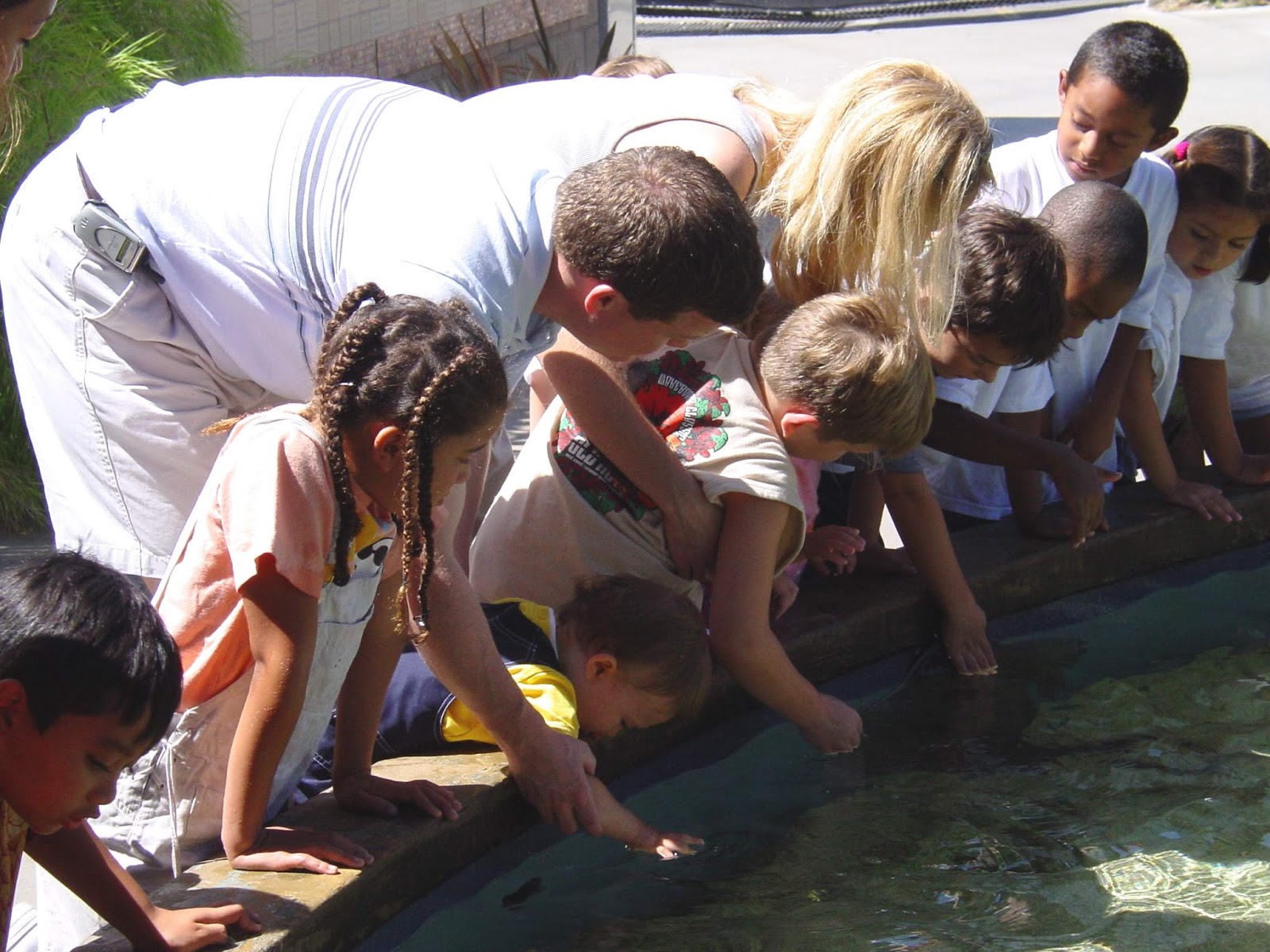
Tonight's picture was taken in August of 2003. We took Mattie to the Los Angeles Zoo for the first time. The Zoo has a wonderful children's section, that provides many hands on opportunities for children to pet and get to learn about sea creatures and farm animals. As you can see Mattie was bending over to try to touch the rays in the pools. He was so tiny though that we needed to hold onto him, otherwise he could have easily landed up right in the water. 


Quote of the day: The two most important days in your life are the day you are born and the day you find out why. ~ Mark Twain


One of the first things I received this morning in an email, was a wonderful three minute video clip that was taken at the IPOS/APOS conference we attended in Washington, DC in July. At the conference, leaders in the psychosocial field were interviewed, and Dr. Andrea Patenaude, a member of our Standards Core development team and the Director of Psychology Research and Clinical Services at Dana-Farber Cancer Institute (Boston, Massachusetts) was selected to talk about the Standards initiative. Andrea forwarded me this clip today, which Peter and I were thrilled to receive it. The video was recorded by the American Society of Clinical Oncology (a professional organization representing physicians of all oncology subspecialties who care for people with cancer).  


The $1.3 billion Center opened to the public on December 16, 1997. The Getty Center sits on a hilltop in the Santa Monica Mountains, just off the San Diego Freeway. From there, visitors can take in the aspects of Los Angeles's landscape—the Pacific Ocean, the San Gabriel Mountains, and the vast street—grid of the city. Inspired by the relationship between these elements, architect Richard Meier designed the complex to highlight both nature and culture.

When approached from the south, the modernist complex appears to grow from the 110-acre hillside. Two computer-operated trams elevate visitors from a street-level parking facility to the top of the hill. Clad in Italian travertine, the campus is organized around a central arrival plaza, and offers framed panoramic views of the city. Curvilinear design elements and natural gardens soften the grid created by the travertine squares.

Natural light is one of the Getty Center's most important architectural elements. The many exterior walls of glass allow sunshine to illuminate the interiors. A computer-assisted system of louvers and shades adjusts the light indoors. The paintings galleries on the Museum's upper level are all naturally lit, with special filters to prevent damage to the artworks.


The view from on top of the Getty Center!


There are many wonderful water elements at the Getty Center (like this big stone structure you see here). But because California is undergoing a severe drought, all fountains have been drained of water. It was very sad to see these features barren. It throws off the serene and peaceful atmosphere of the space. 


We had the opportunity to see two wonderful exhibits today. One featured the chalk drawings, the cartoon transfer process of these drawings onto wood, and the paintings of the Renaissance master, Andrea Del Sarto. I really learned a lot about the painstaking work of cartoon transfers and I provided you with a SHORT clip of the technique below if you are interested. But in essence Del Sarto was ahead of his time, because the technique he used was equivalent to carbon copying things, or in essence the xerox! 

Del Sarto always drew his material FIRST before painting it! This was quite typical for Renaissance artists and though his subject matter was religious, his subjects were always that of family and friends. For example his wife was always his model for when he wanted to paint the Virgin Mary. 


Andrea Del Sarto: The Renaissance Workshop in Action

This major loan exhibition celebrates the transformation of the art of drawing by Andrea del Sarto (1486–1530), one of the great Florentine Renaissance artists. Moving beyond the graceful harmony and elegance of his elders and peers, such as Leonardo da Vinci, Raphael, and Fra Bartolommeo, Andrea brought unprecedented realism and immediacy to his art through the rough and rustic use of red chalk and the creation of powerful life and compositional studies. Comprising rare drawings and panel paintings from key international collections, the exhibition fully illuminated Andrea del Sarto's inventiveness, creative process, and workshop practice. 


Almost Invisible: The Cartoon Transfer Process (a short video clip that shows you this process)

https://www.youtube.com/watch?t=177&v=46_wiOboDk4


Edgar Degas: Russian Dancers and the Art of Pastels

"Dancer taking a bow"

We actually participated in a tour of this exhibit. The docent gave us a fascinating psychological portrayal of Degas. I have always known him to paint dancers and clearly I figured he was fascinated with form, shape, and the precision of capturing these elements. However, I never really gave much thought to why there was so much negative space (empty space) in his pieces or why his subjects never seem to be interacting with one another. In many ways, Degas painted subjects in the same way he lived his life. Which was in isolation and devoid of connecting with people. So it makes perfect sense that we see a dancer in isolation here, separated from the rest of the corp de ballet. He painted through his own lens and I think it revealed a lot about his own inner turmoil. 

This pastel (which is chalk and oil media combined) is entitled, "Waiting." One could ask themselves, waiting for what? Our docent had us all speculate and we all had different interpretations of what the dancer was doing versus the woman in black next to her. Some people thought the dancer was waiting for an audition, or was waiting for results of the audition, and some of us thought the dance just got injured and was waiting and rubbing her foot to determine what would happen next. Needless to say the tell tale Degas sign were..... NO interaction between the subjects and a lot of negative space! Also notice the contrast between these two people, one in vibrant clothes and appears to be young, and the other more mature and wearing dark and rather solemn clothes. 

Yet as Degas aged, he developed cataracts. With that his color palate changed. Our docent explained to us that apparently the last two very clear colors someone with cataracts can see are orange and yellow, which is why these colors were so prominent here. But what stands out tremendously in this pastel piece entitled, "Russian Dancers" was that there was no negative space and the dancers are actually interacting with one another. 


There is great controversy not only around Degas' art work but also around the way he lived his life. He has been accused of being anti-Semitic and over the course of history lost many of his close impressionist buddies due to disagreements around the Dreyfus Affair (The scandal began in December 1894, with the treason conviction of Captain Alfred Dreyfus, a young French artillery officer of Alsatian and Jewish descent. Sentenced to life imprisonment for allegedly communicating French military secrets to the German Embassy in Paris, Dreyfus was imprisoned on Devil's Island in French Guiana, where he spent nearly five years). In addition to that, I learned Degas had issues that fell somewhere along the Autism spectrum. Or at least that is how we would describe them in today's day and age. I have to say I learned a great deal about the man behind the pastels (of which he did OVER 700 of them besides oil paintings), which helps to give me further insights into his works. 

August 19, 2015

Tuesday, August 18, 2015

Tuesday, August 18, 2015 -- Mattie died 310 Weeks ago today.

Tonight's picture was taken in August of 2003. This was Mattie's second trip on an airplane and out to Los Angeles to visit my parents. Mattie loved adventure and seemed to be fascinated with plane travel. So much so that he always remained awake and alert for the entire plane trip! I happen to love this photo of Mattie and Peter testing the pool waters together and dressed in matching suits.


Quote of the day: Whether you think you can or you think you can’t, you’re right. ~ Henry Ford

It has been a very long day of travel to get to Los Angeles. A five hour flight seemed like 10. I have been on turbulent flights before, but this one was bumpy throughout almost the entire flight. So much so that there was practically mutiny to get access to the restrooms on the plane. Every time there was a break in the choppiness and the pilot took off the fasten seat belt sign, people then tried desperately to use the restrooms.  However, as soon as they got to the door of the restroom, they were sent right back to their seats because we hit more choppy weather and the requirements of seat belts were rightfully enforced. It almost became physically unmanageable! So we had to contend with constant turbulence, lack of access to restrooms, and being confined to a tight and VERY FULL space. It wasn't a recipe for happiness, and I honesty don't know how the crew works in these conditions. Because they have to manage the tensions of hundreds of people.  

Now that was only part one of the problem, part two of the issue were my row mates. I had a mother and son team sitting next to me, and the husband/father of this team sitting in the row in front of me. This three some was noteworthy. The mom, who sat next to me, wouldn't disengage from her carry-on luggage at ANY TIME. What I mean by this is, she had bags and bags ON TOP OF HER LAP. I am not talking a purse or small bag. I am talking about back pack size bags and try two of them on her lap and one at her feet! I was certain a flight attendant would flag her, but it NEVER happened. This woman flew with these bags on top of her, and in essence on top of me at take off, throughout the flight, and even during the landing!!! If it were only that, it would be bad enough, but there was more. Her and her son had anxiety about the window shade. They HAD to have it DOWN, so no one could see outside. I have the exact opposite issue as they do, I NEED TO SEE OUT! It helps with my motion sickness and my level of anxiety about flying. So what made them at ease, drove me absolutely BATTY! Then it was there nonstop talking and the passing of notes to her husband in the row in front of us. It was an absolute side show and some how I felt like I was in center ring. TRAPPED in a dark plane cabin, unable to leave my seat, and dealing with turbulence.


By the time I landed in LA, I was very ready to get off the plane. I had developed a violent headache and was feeling ill. Yet don't you know it, we remained parked on the runway for 25 minutes after we landed since there was a plane at our gate. I naturally can put all of this into context, since I am happy to have gotten here in one piece and am alive to tell this tale. But United truly had me laughing. Their safety video has moved from being serious in nature to that of pure entertainment value. I felt like I was watching a commercial plugging all the places they fly to, rather than something that was going to inform me about my safety. I also think it is interesting that this video now replaces the attendant having to walk you through these steps. You can see the video for yourself:

https://www.youtube.com/watch?v=WqAAQ0ZZMyw

The other issue that had me and countless other passengers were the seat back TVs. Not the fact that they had them, but the fact that there is close to an $8 charge if you want to view anything on them. I assure you that even if you bring your own headphones, the system shuts off after two minutes in the air unless you pay to use it with a credit card. You can't even see a map of your flight without paying for that perk. Given that other airlines give you access to this form of entertainment for free, this to me was very distasteful especially when you reflect on the fact that you are migrating across the Country in what feels like a cattle car.